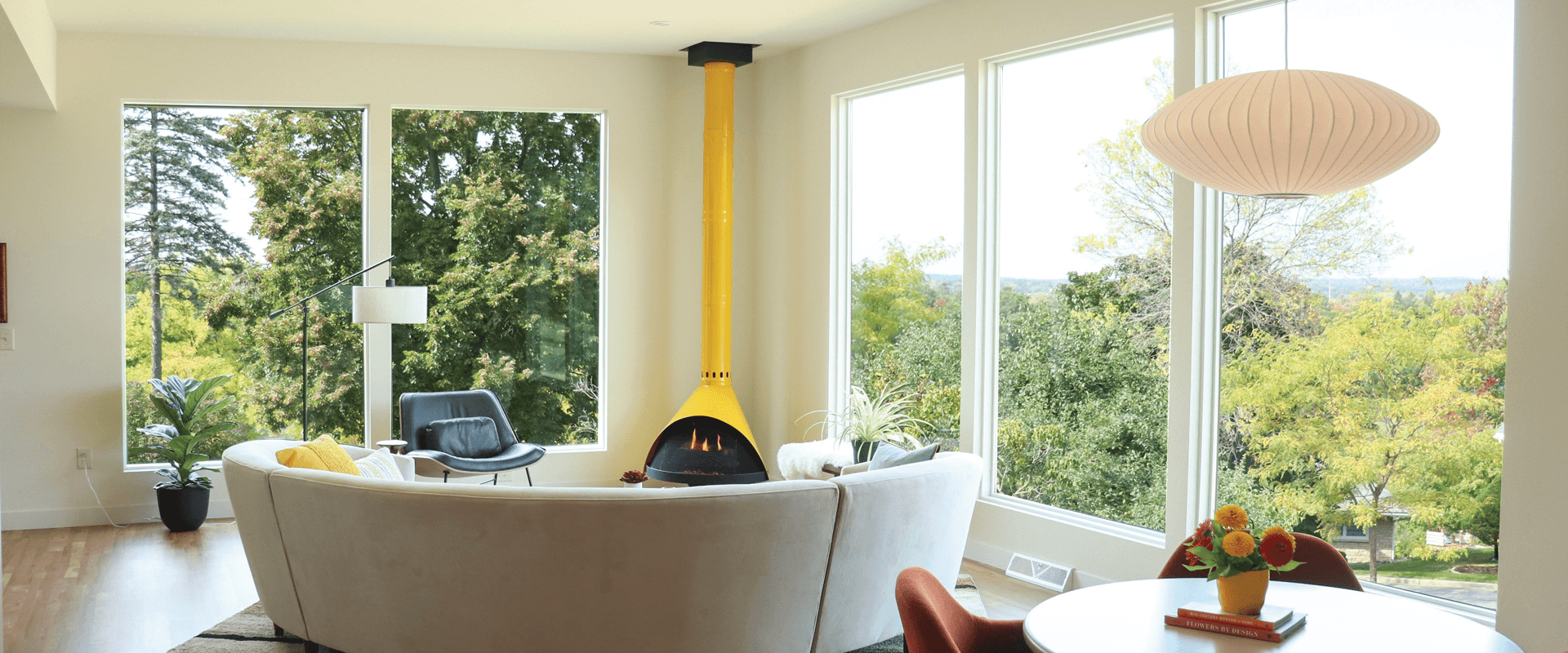
Though the name evokes a specific era, Midcentury Modern design remains a current and influential aesthetic. Homes with this architectural style showcase rectangular shapes, clean lines, crisp angles, horizontal spans, natural materials, and expansive windows and doors. The style was defined in the 1950s and ’60s, but homes of later decades continued to incorporate its features into broader, evolving uses that remain relevant for 21st century designs.
Indoor-outdoor Living in Style
Supporting the post-World War II population boom, Midcentury Modern residential design offered a modified, modular approach that paired well with accelerated construction methods. While homes of this time share many similarities, customization has always been prized by homeowners. The Midcentury Modern structure can span lengthwise along a wide front lawn or stack vertically and cantilever above sizable decks and patios.
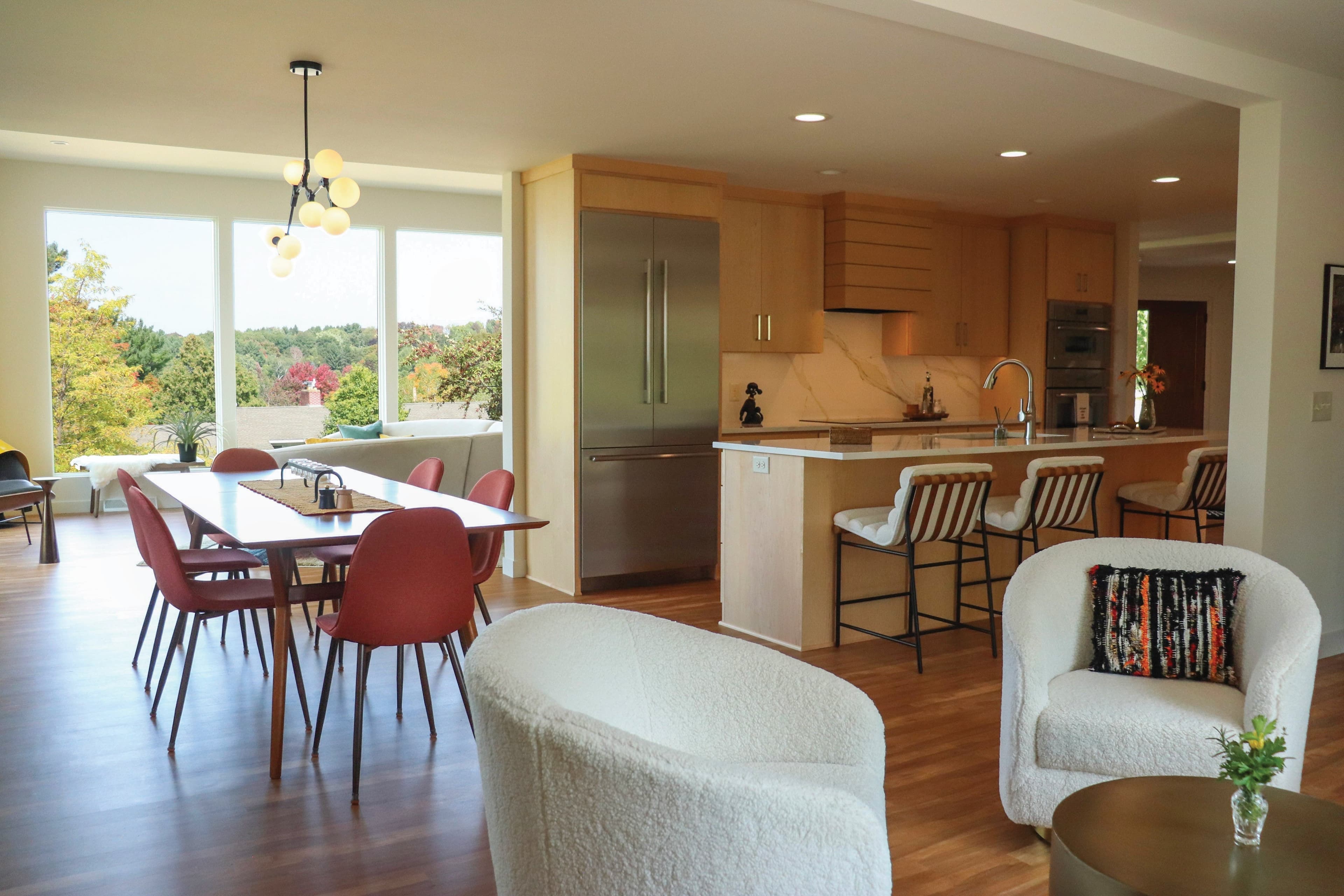
Large stretches of windows and doors were central to Midcentury Modern home design, reflecting and replicating the rectangular forms of its architectural vocabulary. The vast views and transparency seamlessly expand the living space within a limited footprint, deliberately blending the outdoors and indoors into a cohesive whole.

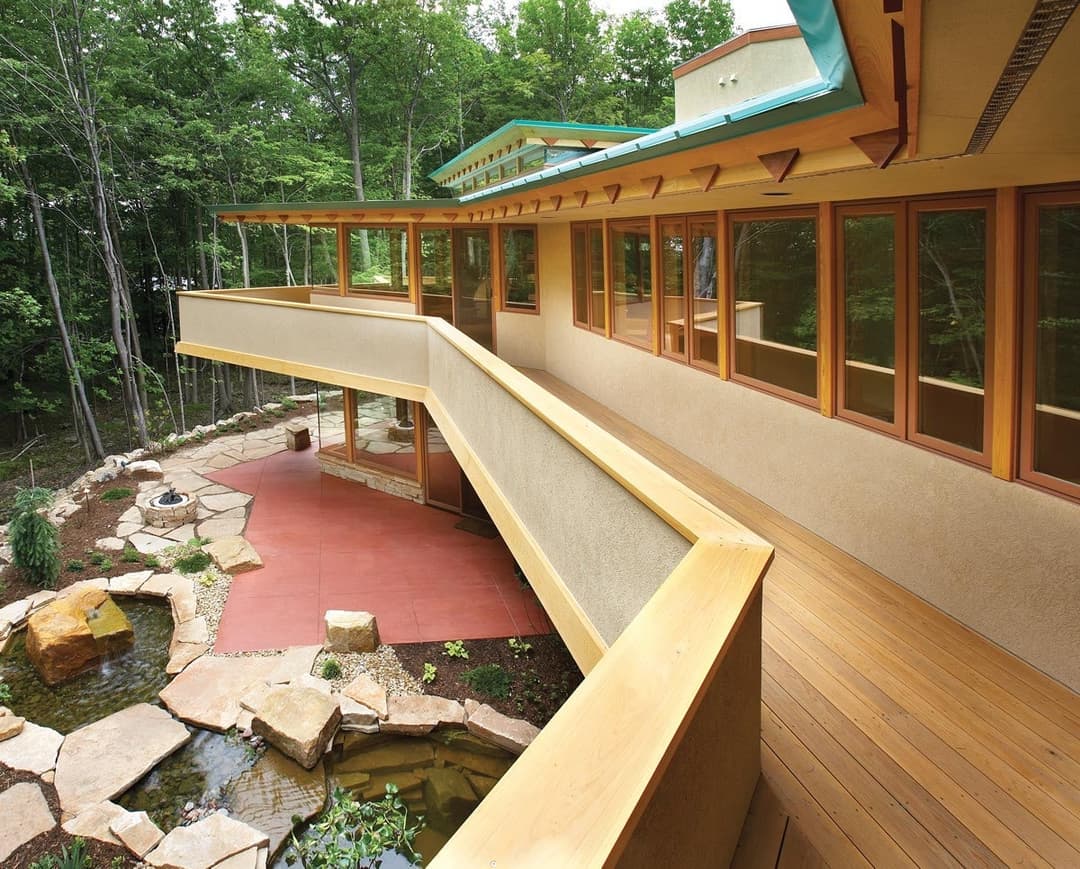
Rather than traditional walled-in rooms of earlier architectural styles, Midcentury Modern designs thoughtfully considered communal and individual spaces. Shared areas are loosely plotted by interior finishes, furniture and see-through sculptural partitions to create a flowing, open plan, apart from private rooms.
Long Horizontal Spans, Wide Window Views
Clerestory windows are a defining characteristic of Midcentury Modern homes. Positioned just beneath the ceiling, these narrow, rectangular windows promote natural light, yet preserve privacy and interior wall space for artwork and furniture. Some architects will opt to echo the upper ribbon of clerestories with a lower row of awning windows above the floor, leaving the midsection opaque.
Where full-height transparency and views are preferred, clerestory windows can be the cap on a large expanse of fixed and operable windows mulled together as a unified configuration. Following angled rooflines, larger windows also may be positioned up top and custom crafted in unique geometric forms.


Picture windows are ubiquitous elements of Midcentury Modern living rooms. The large rectangular picture window takes its central place of honor in nearly every home of this style, often flanked by casements. Here too, clerestories or low-lying windows may be employed for panoramic views.
For variation in large rooms with exterior-facing walls, operable awnings and casements may be aligned in series to passively capture prevailing air currents and draw fresh air into the home. Double hung windows also allow ample natural ventilation in bathrooms and bedrooms. With double hungs, both top and lower sash can be positioned to maximize airflow.
Visual Connection, Eye-catching Finishes
Kitchens in Midcentury Modern designs may have double hung, crank-out casement or sliding windows. Regardless of their operation, at least one window is almost always placed behind the sink for a good view of the backyard swing set, side garden or driveway.
Whether located in the kitchen, dining room, living room or in multiple rooms, sliding doors are synonymous with Midcentury Modern designs and celebrated as the era’s champions of indoor-outdoor living. Grills and lounge chairs are staples on outside patios and pool sides for hosting cookouts, potlucks and other friendly gatherings.
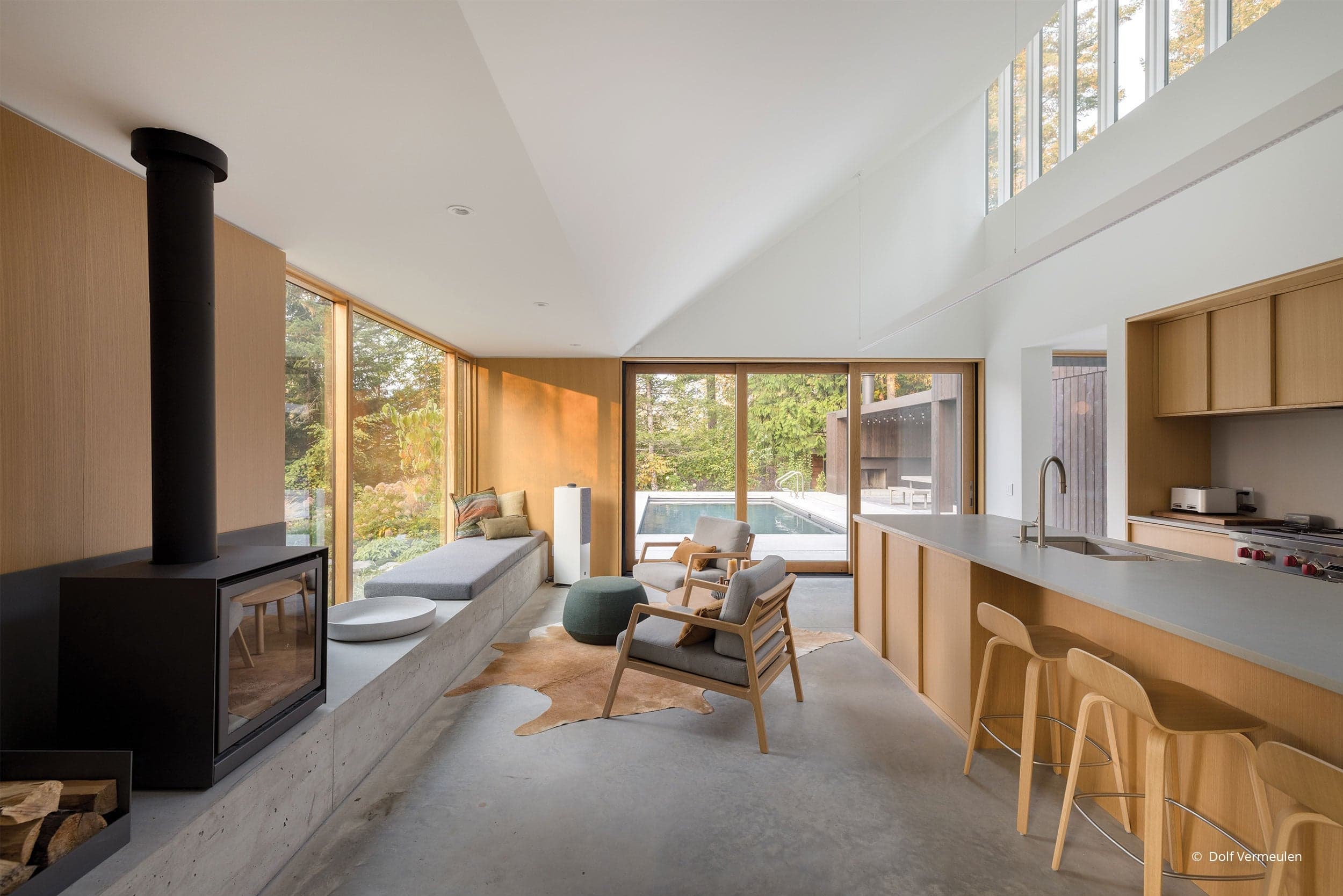
Emphasizing a connection to nature and the grounded comforts of home, biophilic materials are prioritized in Midcentury Modern designs. Clear glass, richly grained wood, sleek metal and substantial masonry serve as foundational components, typically oriented to accentuate their inherent linear qualities. Displayed on the exterior and the interior, this material palette transcends both to deliver tactile and visual continuity.
Within the harmonious, neutral aesthetic of Midcentury Modern design, vibrant pops of color signal focal points, including for the esteemed front entry. Transitioning from the front walk to the foyer, the main entrance of a Midcentury Modern home usually is modest inside, but its exterior can be boldly welcoming. Entry doors along with their sidelites and transoms can be finished in bright orange, turquoise, yellow, or other eye-catching finishes.
Geometric Shapes, Glass Options
Entrance doors, and even swinging side doors, frequently incorporate glass inserts as small, square windows. While rectilinear forms are most common, triangles and diamonds provide decorative flair. More adventurous designs feature trapezoids, chevrons or octagons in repeating geometric patterns.
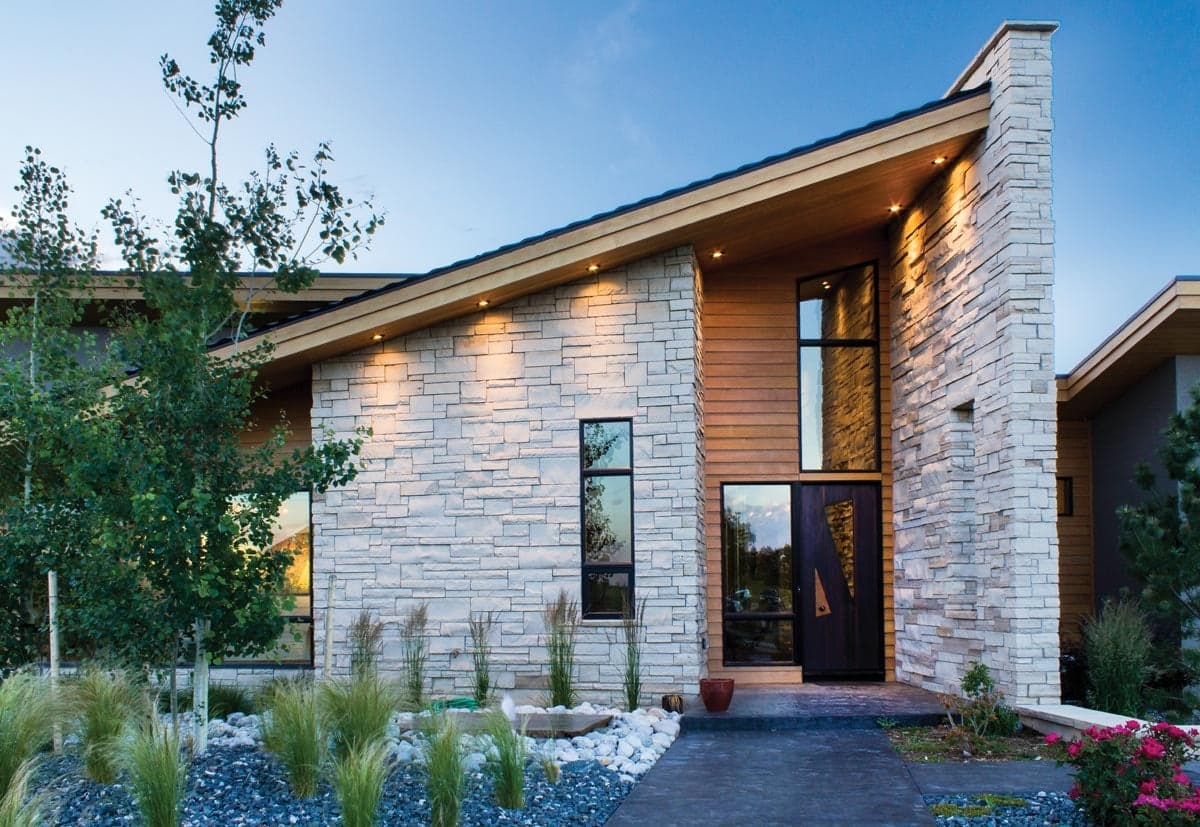
Large lites of glass were readily available by the 1950s, so divided lites and mullion grids were unnecessary. Midcentury Modern design celebrates unencumbered, unadorned views. Today, modern window and door designs can replicate this quintessential look with improved performance. Tempered, coated and other glass options are now available to support enhanced appearance, safety and security, energy efficiency, quiet and comfort, as well as to protect artwork, antiques and furnishings from fading.
Open Floorplans, Specialty Spaces
Concurrent with the growth of Midcentury Modern design, TV and hi-fi entertainment systems were given a prominent station inside multipurpose media rooms. Large eat-in kitchens became the norm to accommodate casual dining for family meals and drop-in visitors. Formal dining rooms reestablished their role as spaces reserved for holidays and special occasions.
Functionally specific rooms in single-family homes of the 1950s and ’60s also gained prestige. More than separating owners’ suites with private baths from children’s bedrooms with connected baths, these specialty zones included dens and studies, sewing and crafting rooms, “rumpus” rooms for games and activities, concealed laundry rooms, and workshops within attached, enclosed garages.
As cars of the mid-1900s became more attainable and roads more reliable, homeowners hitched up their boats and bicycles to explore the parks and attractions across the United States. Returning home, the views through their expansive windows and doors encouraged them to keep looking forward with appreciation for their current surroundings. This sentiment remains integral to the spirit of Midcentury Modern design and its enduring appeal.
Midcentury Modern architecture may have its roots in the 20th century, but its influence is timeless. Large, expansive windows and sliding doors crafted with natural materials allow you to enjoy daylight, fresh air and picturesque views. Embracing these well-established design principles, you can create a beautiful, functional home to last generations.


